The Gospel According to Linen
In a converted warehouse in Portland, Oregon, 47 women sit in a circle on hemp meditation cushions, each clutching a piece of clothing they've been instructed to "release." At the center of the circle stands their leader, a ethereal figure named Sage Minimalist (née Jennifer Peterson from Ohio) wearing what she calls her "uniform of intentionality"—a $400 linen tunic, $300 organic cotton pants, and $200 handwoven sandals that somehow cost more than most people's monthly car payments.
 Photo: Portland, Oregon, via assets.roadrunner.travel
"Today, we shed the weight of material attachment," Sage intones, her voice carrying the practiced cadence of someone who has monetized mindfulness. "Who among you is ready to confess your excess?"
Welcome to a "Closet Liberation Intensive," the flagship program of the Capsule Wardrobe Collective, a organization that has somehow convinced thousands of Americans to pay premium prices for the privilege of owning fewer clothes. What began as a practical approach to streamlined dressing has evolved into something that looks suspiciously like a high-end cult, complete with confession rituals, loyalty tests, and leaders who live in luxury while preaching the virtues of having less.
The Minimalist Money Machine
The numbers behind the capsule wardrobe movement are anything but minimal. Industry analysis shows that the "intentional fashion" market has grown to $50 million annually, with top influencers commanding five-figure speaking fees and charging $1,800 for "wardrobe liberation consultations." The irony is palpable: an industry built on the promise of spending less that has convinced people to spend more than ever on the experience of having less.
Sage Minimalist, whose real name we discovered after extensive investigative work involving LinkedIn and her high school yearbook, has built an empire on the simple premise that 33 carefully chosen items can transform your entire existence. Her online course, "The Sacred 33: A Journey to Sartorial Enlightenment," has enrolled over 10,000 students at $497 each, generating nearly $5 million in revenue.
"The number 33 isn't arbitrary," Sage explains during our interview, conducted in her 4,000-square-foot "minimalist compound" that somehow requires a full-time housekeeper to maintain its carefully curated emptiness. "It represents the perfect balance between functionality and spiritual growth. Any more, and you're trapped in material excess. Any fewer, and you're denying your authentic self expression."
The Recruitment Process: How Normal People Become Capsule Converts
The path to capsule wardrobe enlightenment typically begins innocuously enough. Overwhelmed by cluttered closets and decision fatigue, normal people stumble across Instagram accounts featuring impossibly chic women in perfectly neutral outfits, standing in impossibly organized closets that look more like art installations than functional storage spaces.
The imagery is seductive: a life of effortless elegance, where every morning begins with the zen-like simplicity of choosing between seven pre-approved neutral tops. The promise is intoxicating—not just a cleaner closet, but a cleaner life, clearer mind, and somehow, according to testimonials, better relationships, improved finances, and enhanced spiritual awareness.
"I thought I was just buying a course about organizing my clothes," says former member Rachel Martinez, who spent $3,400 on various Capsule Wardrobe Collective programs before what she calls her "awakening." "But within six months, I was attending virtual 'accountability circles' three times a week, submitting photos of my outfits for approval, and feeling genuinely guilty about owning a backup pair of black pants."
The Hierarchy of Holiness
Like any well-structured organization with questionable intentions, the capsule wardrobe community has developed a complex hierarchy based on commitment level and, more importantly, spending capacity. At the bottom are "Seekers"—newcomers who have purchased only the basic course and are still learning to "release their attachment to choice abundance."
Next come the "Practitioners," who have completed the advanced program and earned the right to post in exclusive Facebook groups where members share daily outfit photos and receive feedback from more experienced members. These groups function like a cross between a support group and a surveillance state, where members monitor each other's adherence to the 33-item limit with the dedication of religious fundamentalists.
At the top of the pyramid are the "Ambassadors"—women who have achieved what the organization calls "wardrobe enlightenment" and now recruit others while taking a percentage of course sales. These ambassadors, who undergo "Minimalist Leadership Training" at retreats that cost $2,500 per person, function as regional cult leaders, hosting local meetups and identifying potential high-value recruits.
The Confession Ritual: Where Psychology Meets Profit
Perhaps the most disturbing aspect of the capsule wardrobe movement is its appropriation of therapeutic and spiritual practices for commercial gain. The "Closet Liberation Intensives" that Sage hosts monthly are carefully designed psychological experiences that break down participants' resistance to the organization's more extreme demands.
The day begins with participants writing "clothing confessions"—detailed accounts of their relationship with material possessions, their fears about letting go, and their "shopping sins." These confessions are then read aloud to the group, creating an atmosphere of vulnerability and shared shame that makes participants more susceptible to the organization's messaging.
"They had me write about every piece of clothing I'd ever regretted buying," recalls former member Lisa Chen. "Then I had to stand up and apologize to the group for my 'unconscious consumption patterns.' It was humiliating, but somehow I felt like I deserved it. That's when I knew something was seriously wrong."
The Economics of Artificial Scarcity
The financial model underlying the capsule wardrobe industry is particularly cynical. By convincing people that happiness comes from owning fewer, better things, influencers have created a market for extremely expensive "investment pieces" that participants feel obligated to purchase to properly execute their minimalist lifestyle.
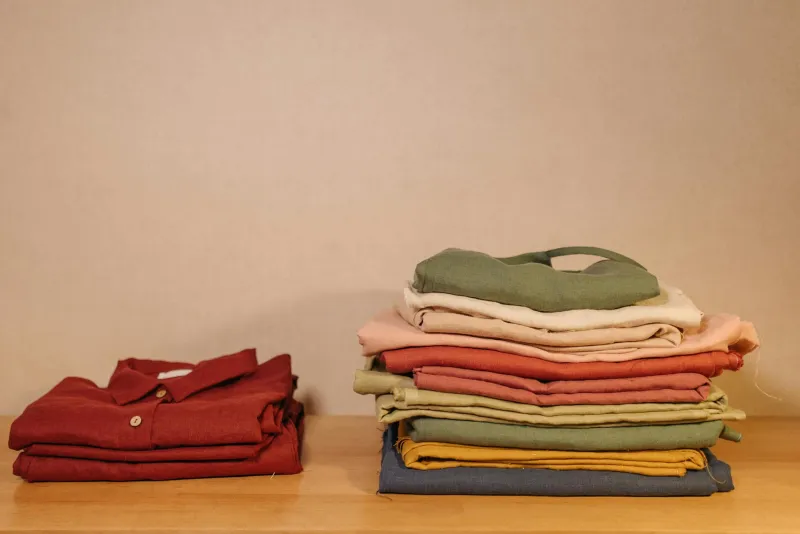
A typical "Sacred 33" wardrobe, as recommended by top influencers, includes items like a $800 "intention-setting blazer," $400 "mindful jeans," and $300 "consciousness-raising cashmere sweaters." The total cost for a properly curated minimalist wardrobe often exceeds $10,000—more than most people spend on clothes in several years.
"The math never made sense," says financial planner David Rodriguez, who has counseled several former capsule wardrobe enthusiasts. "These women were spending more on 33 'perfect' items than they'd ever spent on clothing before, all while being told they were saving money by buying less. It's brilliant marketing disguised as spiritual guidance."
The Compound: Where Minimalism Meets Maximalist Irony
Our investigation led us to Sage's primary residence, a sprawling compound in the Oregon hills that serves as both her home and the headquarters for her minimalist empire. The property, which she purchased for $2.3 million using proceeds from her courses, features multiple buildings, including a "meditation barn," a "creativity studio," and a "wardrobe temple" where she films her content.
The irony is overwhelming: a woman who preaches the virtues of living with less owns more real estate than most small businesses, maintains multiple vehicles (each painted in carefully chosen neutral tones), and employs a staff of twelve to manage her "simple" lifestyle.
"Sage needs space to do her important work," explains her assistant, a recent college graduate who moved to Oregon specifically to work for the organization and now lives in a converted shed on the property. "Physical minimalism and spatial minimalism are completely different concepts. She's creating room for her vision to flourish."
The Breaking Point: When Members Start Asking Questions
The facade began to crack when several high-profile members started questioning the organization's increasingly expensive demands. Former Ambassador Jennifer Walsh went public with her concerns after being pressured to recruit family members and charged $500 for a "spiritual styling session" that consisted primarily of being told her black pants were "energetically heavy."
"I realized I was paying someone $1,800 to tell me I owned too many clothes, while she lived in a mansion and owned seven different linen tunics that she claimed were 'variations on a theme,'" Walsh says. "The cognitive dissonance became impossible to ignore."
Other former members describe being pressured to donate clothing to the organization's "liberation ceremonies," only to later discover these items being sold on the organization's "pre-loved" website at premium prices. The website, which positions itself as a sustainable marketplace for "conscious fashion," generates an additional revenue stream while providing Sage with a steady supply of inventory from her own followers.
The Exit Strategy: Deprogramming from Designer Minimalism
Exiting the capsule wardrobe community often requires the same kind of support systems used to help people leave actual cults. Former members describe experiencing genuine withdrawal symptoms, including anxiety about making clothing choices without group approval, guilt about owning "excess" items, and difficulty trusting their own aesthetic judgment.
"I had to relearn how to shop for myself," says former member Maria Rodriguez. "I'd been conditioned to believe that wanting more than 33 items was a moral failing. It took months of therapy to realize that owning a few extra sweaters doesn't make me a bad person."
Several former members have started their own support groups, both online and in person, helping others recognize the manipulative tactics used by minimalist influencers and rebuild healthy relationships with clothing and consumption.
The Bottom Line: When Less Costs More
The capsule wardrobe movement represents something particularly insidious about contemporary influencer culture: the ability to monetize anxiety while positioning profit as enlightenment. By convincing people that their natural desires for variety and choice are spiritual failings, these organizations have created a market for expensive solutions to problems they've artificially created.
The real tragedy isn't that people are being overcharged for linen tunics—it's that genuine desires for simplicity and mindful consumption are being exploited by people who practice neither. In a culture already drowning in consumption anxiety, the last thing people need is to pay premium prices for the privilege of feeling guilty about their closets.
As for Sage Minimalist, she continues to expand her empire, recently announcing plans for a "Minimalist Motherhood" course and a line of "intentional baby wear" that starts at $80 for a organic cotton onesie. Because apparently, even infant clothing choices require professional guidance now.
After all, in an economy where everything has been commodified, why should simplicity be any different?