Minimalism Mogul's 47-Item 'Less Is More' Collection Proves That Math Is Dead and Capitalism Wins Again
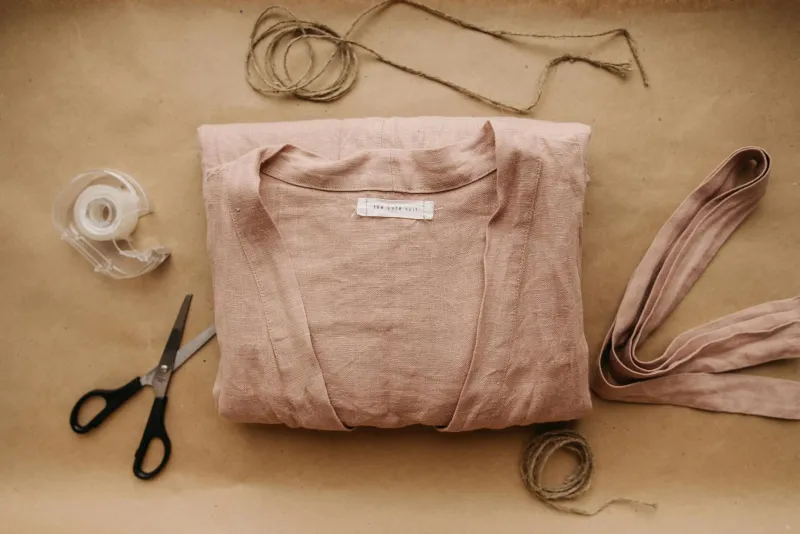
The Prophet of Less Becomes the Merchant of More
Meet Serena Whitespace, the Instagram oracle who convinced 2.3 million followers that true enlightenment could only be achieved through owning exactly twelve clothing items. For three years, she's been the minimalism movement's most profitable prophet, turning her sparse closet into a content goldmine worth an estimated $4.2 million.
Her morning routine videos—featuring the same beige linen shirt, organic cotton trousers, and hand-knitted cardigan—have been viewed over 50 million times. Her book, "Twelve and Free: How I Found Myself by Losing Everything Else," topped the New York Times bestseller list for sixteen weeks. She's given TED talks on the "tyranny of choice" and appeared on every major morning show to explain how owning fewer things made her exponentially wealthier.
But this week, Whitespace shocked the intentional living community by announcing her partnership with fast-fashion behemoth QuickThread to launch "The Essence Collection"—a 47-piece capsule that she describes as "the ultimate expression of thoughtful consumption."
The Collection That Defies All Logic (And Basic Arithmetic)
The Essence Collection includes four different "perfect white shirts," three variations of "the only black pants you'll ever need," and seven scarves that are each described as "the final scarf." There are two "signature cardigans" that look identical except one has slightly longer sleeves, and five "investment blazers" priced between $89 and $127.
The collection's crown jewel is the "Capsule Capsule"—a $45 pill organizer designed to hold vitamins that "support your minimalist journey." The product description notes that it "reduces decision fatigue around wellness" and comes in three colorways: Mindful Beige, Intentional Ivory, and Conscious Cream.
"Each piece in this collection eliminates the need for ten other pieces," Whitespace explained in her launch video, somehow maintaining a straight face while standing in front of a backdrop featuring all 47 items. "When you buy these four white shirts, you'll never need to buy another white shirt again. That's the power of intentional multiplication."
The Followers Are Having a Spiritual Crisis (But They're Still Shopping)
The comment sections of Whitespace's announcement posts read like a support group meeting for people experiencing cognitive dissonance in real time.
"I'm so confused but also adding everything to my cart," writes @mindful_melissa_92. "If Serena says 47 pieces equals minimalism, then math must be a social construct designed to keep us trapped in scarcity mindset."
@intentional_living_lindsay chimed in: "I've been following the twelve-item rule for two years and I've never been happier! Can't wait to expand my minimalism with all 47 pieces. This feels so aligned with my values of having less by having more."
The most popular comment, with over 3,000 likes, simply reads: "My credit card is crying but my chakras are aligned."
The Economics of Selling Nothing (For Something)
Dr. Rebecca Martinez, a consumer psychology professor at Northwestern University, isn't surprised by the collection's success. "Serena has essentially monetized the concept of restraint," she explains. "Her followers aren't just buying clothes—they're buying permission to consume while maintaining their identity as conscious consumers."
The numbers support Martinez's theory. Within 48 hours of launch, QuickThread reported that The Essence Collection generated $2.8 million in sales, with the average customer purchasing 12.7 items. The company's stock price jumped 15% on news of the collaboration.
"What's brilliant about this approach is that it reframes excess as intentionality," Martinez continues. "Buying 47 items becomes an act of mindfulness rather than mindless consumption. It's capitalism with a meditation app aesthetic."
The Minimalism Industrial Complex Reaches Peak Absurdity
Whitespace's pivot from minimalism guru to maximalist merchant represents the natural evolution of the lifestyle influencer economy. What started as a genuine movement toward conscious consumption has morphed into a $12 billion industry that profits from selling people the idea of buying less—by buying more.
The irony isn't lost on everyone. Fashion critic Amanda Chen notes, "We're watching someone who built her entire brand on the phrase 'less is more' prove that 'more is more profitable.' It's like watching a vegan influencer launch a steakhouse and call it 'plant-adjacent dining.'"
The Capsule Collection That Capsized Common Sense
Perhaps the most telling moment came during Whitespace's Instagram Live launch event, when a follower asked how owning 47 new items aligned with her twelve-item philosophy.
"That's such a beautiful question," Whitespace replied, her eyes slightly glazed with the look of someone who's spent too much time in their own marketing copy. "You see, when you buy all 47 pieces, they become one unified energy. It's like how twelve grapes become one bunch. The collection transcends traditional counting methods."
The comment section exploded with fire emojis and "yasss queen" responses, proving that in the attention economy, coherence is optional but enthusiasm is currency.
What's Next for the Minimalism Movement?
As The Essence Collection continues to break sales records, other minimalism influencers are reportedly reconsidering their own capsule wardrobes. Marie Kondo has been spotted taking meetings with major retailers, and the "Swedish Death Cleaning" movement is rumored to be exploring licensing deals.
Whitespace, meanwhile, is already teasing her next project: a 73-piece "Micro Collection" that she promises will "make The Essence Collection look maximalist by comparison."
In the end, perhaps Whitespace's greatest achievement isn't building a minimalism empire—it's proving that in America, even the concept of having less can be packaged, marketed, and sold for more. It's capitalism at its most beautifully absurd: selling people the dream of simplicity through the complexity of endless consumption.
The revolution will not be minimized. It will be monetized, marketed, and sold in 47 convenient pieces.