Meet the 'Return Interception Specialists' Getting Paid to Block You From the UPS Drop Box

Meet the 'Return Interception Specialists' Getting Paid to Block You From the UPS Drop Box
It was a Tuesday afternoon in early March when Diane, 41, found herself sitting in a Panera Bread in suburban Denver, across from a woman named Courtney, who was charging her $175 an hour to talk her out of returning a pair of wide-leg linen trousers.
The trousers did not fit. They had never fit. They had arrived two weeks earlier looking nothing like the model, who was approximately eleven feet tall and had the bone structure of a Greek statue. Diane had the bone structure of a regular person from Denver.
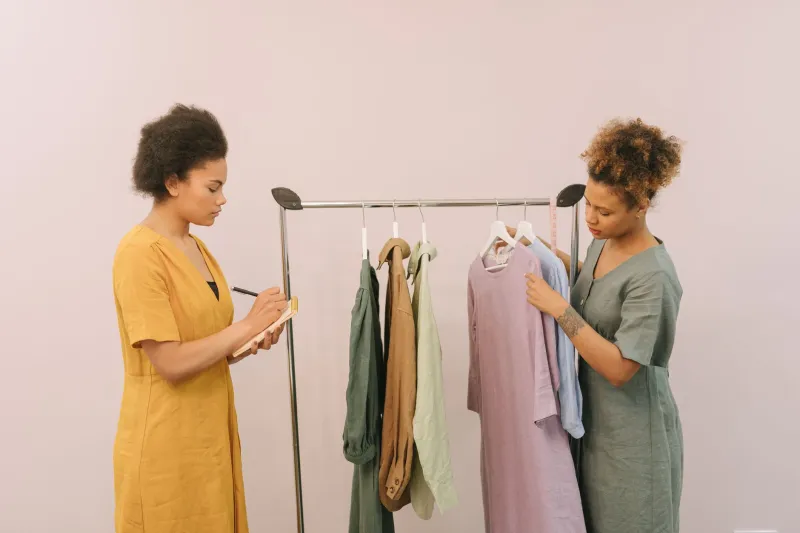
Courtney — certified "Post-Purchase Identity Coach," according to her business card, which had a little infinity symbol on it — slid the trousers across the laminate table and said, with complete sincerity: "I want you to consider that you're not returning these pants. You're abandoning a future version of yourself."
Diane did not return the pants.
Diane has since returned to Courtney three more times.
The Industry That Should Not Exist (But Absolutely Does)
Welcome to the booming, deeply strange, financially troubling world of return coaching — a service niche that has quietly metastasized across the wellness-adjacent corners of the internet and is now operating in at least fourteen major US metro areas, according to research that consists primarily of browsing Instagram and feeling increasingly unwell about it.
The premise is straightforward, in the way that all slightly predatory things are straightforward once you strip away the branding. Women — and it is overwhelmingly, almost exclusively women being marketed to here — buy things online, experience buyer's remorse, attempt to return them, and now, apparently, can hire someone to stop them.
These practitioners go by several titles: Return Interception Specialist, Post-Purchase Identity Coach, Buyer's Remorse Reframing Consultant, and, in one particularly audacious case spotted on a Brooklyn-area website, "Retail Grief Counselor." They charge anywhere from $85 to $300 per session. Some offer package deals. At least two have waiting lists.
The industry does not have a trade association, a regulatory body, a licensing requirement, or, seemingly, any awareness of its own inherent conflict of interest. It does, however, have extremely good Instagram aesthetics.
The Language of Not Letting You Have Your Money Back
Return coaching runs on buzzwords the way a luxury candle runs on synthetic amber: abundantly, expensively, and with a smell that takes a while to identify as a problem.
The central concept is "post-purchase identity grief" — the idea that when you decide to return something, you are not merely canceling a transaction. You are, according to practitioners, mourning a version of yourself you'd briefly imagined while checking out. The $600 linen trousers weren't just pants. They were a self-concept. And returning them is, in the language of the field, "a self-concept funeral."
There is also "buyer's remorse reframing," which is exactly what it sounds like: a systematic effort to convince you that the remorse is the problem, not the purchase. And "aspirational relationship investment," a phrase that refers to buying clothes for a lifestyle you don't currently live but might theoretically inhabit someday, and which your coach will argue you should keep because "growth requires friction."
Friction, in this context, means pants that don't fit.
"We're not telling women to keep things they hate," says Melissa Thorn, a return coach based out of Nashville who asked us to identify her as a "Wardrobe Transition Strategist" instead, which we will not be doing. "We're helping them examine whether the impulse to return something is coming from their authentic self or from fear."
The fear, apparently, is of $600 linen trousers.
The UPS Store as Emotional Battleground
Field reports from actual UPS Stores across the country suggest that the return coach intervention typically happens in one of three formats: an in-person session at a nearby coffee shop, a phone call taken in the parking lot, or — and this is real — a FaceTime consultation conducted while the client stands in line holding the return package.
One UPS Store employee in Naperville, Illinois, who asked to remain anonymous and who seemed genuinely tired, described watching a woman stand at the counter for eleven minutes on a phone call before ultimately walking out with her package and driving away.
"She came back the next day and returned it anyway," he said. "I didn't say anything."
The return coach industry has, naturally, developed a counter-strategy for this scenario: the "48-hour hold," in which clients are asked to sign an informal agreement not to process any return without a consultation first. The agreement is not legally binding. It is, however, written on very nice cardstock.
The Math, Which Is Not Helping Anyone
Let's do the arithmetic that nobody in this industry wants you to do.
If you hire a return coach at $175 per hour for a two-hour session to process your feelings about a $180 dress you were going to return, you have spent $350 to not receive $180. You are now $350 poorer than you were before you bought the dress, you still have the dress, and you have also paid a woman named Courtney to tell you that your relationship with the dress is "aspirational."
The dress doesn't fit.
Return coaches, when confronted with this math, tend to pivot to the concept of "intangible value" — the personal growth, the self-knowledge, the deeper understanding of your purchasing psychology that the session has provided. This is a reasonable argument that would be significantly more reasonable if it weren't being made by someone with a financial incentive to keep you in the room.
Diane's Update
Diane, back in Denver, still has the linen trousers. She has worn them once, to a backyard barbecue in June, where she was, by her own account, extremely uncomfortable. She has returned to Courtney twice more since then, once to process buying a cashmere sweater that arrived in the wrong color, and once for what she describes as "a preventative session" ahead of a major Anthropologie sale.
"I think I've spent more on coaching than I have on clothes at this point," she says, laughing in a way that doesn't quite reach her eyes. "Courtney says that means I'm making real progress."
The linen trousers are, as of press time, still in Diane's closet.
The return window closed in April.
Courtney's calendar is fully booked through September.