The New Uniform Wars
Remember when the most competitive thing about school pickup was who had the newest Range Rover? Those were simpler times. Now, the real battle happens in the carefully curated three-minute window between parking and collecting your child, where America's most competitive mothers engage in psychological warfare disguised as "intentional dressing."
Gone are the days of obvious status symbols. The new currency of suburban superiority is looking like you definitely didn't try while spending more money than most people make in a month. It's performance art masquerading as mindfulness, and the audience is every other parent desperately trying to decode whether those "effortless" wide-leg trousers cost $60 or $600.
The Capsule Wardrobe Cartel
Meet the new queens of the carpool lane: the Intentional Dressing Influencers. These women have weaponized wellness culture into a uniform so specific that deviation equals social death. The formula is deceptively simple: cream-colored everything, "investment pieces" that look like they came from a monastery gift shop, and the kind of calculated dishevelment that requires a team of stylists.
The unofficial dress code includes:
- Wide-leg trousers in "Meditation Oat" ($485)
- An "heirloom quality" white button-down with precisely three buttons undone ($320)
- Minimalist gold jewelry that costs more than most cars ($2,400 for the "starter set")
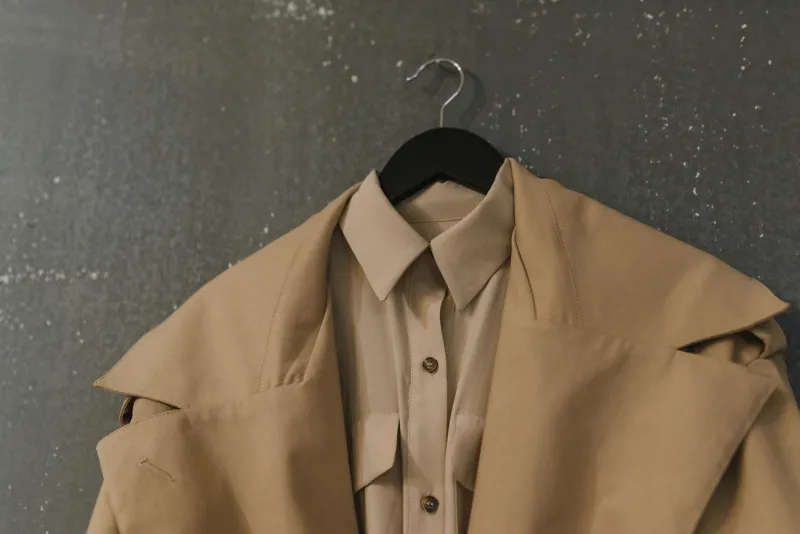
- The obligatory oversized blazer in "Enlightened Beige" ($650)
- Leather slides that whisper "I'm too evolved for heels" ($420)
The Great Tote Bag Intelligence War
But the real arms race is happening at bag level. The logo-heavy status symbols of yesteryear have been replaced by an even more complex system of signaling: the Artisanal Tote.
These aren't just bags—they're statements of philosophical superiority. Made by "sustainable artisans" in places like "a small village in Portugal" or "a women's cooperative in Guatemala," they cost upwards of $400 and come with origin stories longer than most novels.
The tote hierarchy is ruthlessly specific:
- Level 1: Mass-produced "ethical" canvas ($89)
- Level 2: Small-batch woven grass ($240)
- Level 3: Hand-stitched leather with "imperfections that tell a story" ($450)
- Level 4: Custom-made from "reclaimed materials" with a six-month waiting list ($800)
The Effortless Effort Paradox
The cruelest twist in this new world order is that looking "effortless" requires more effort than ever before. Where the old guard could simply buy a designer handbag and call it a day, today's pickup line warriors must master the art of strategic dishevelment.
Hair must be "lived-in" but not messy (achieved through $200 "undone waves" appointments). Makeup must be "no-makeup makeup" (requiring $400 worth of products to create the illusion of wearing none). Clothes must look "thrown together" (after consulting with a $300/hour "capsule wardrobe stylist").
The result is a parking lot full of women who've spent three hours and $1,200 looking like they just rolled out of bed—if their bed was featured in Architectural Digest.
The Cream-Colored Conspiracy
Somewhere along the way, the intentional dressing movement decided that color itself was vulgar. The acceptable palette has been narrowed to various shades of beige, cream, oat, and what can only be described as "expensive white."
This chromatic restriction has created its own form of competition. Mothers spend hours sourcing the perfect shade of "not-quite-white" that signals both purity of intention and depth of wallet. There are Instagram accounts (@50ShadesOfCream) dedicated entirely to identifying the exact Benjamin Moore paint color that matches this season's "it" neutral.
The psychology is diabolical: by eliminating obvious luxury signals like logos and bright colors, the movement has created a system where only true insiders can decode the price tags. It's luxury for people who think regular luxury is beneath them.
The Pinterest Board Pipeline
The intentional dressing industrial complex has created its own content ecosystem. Pinterest boards with names like "Elevated Essentials" and "Mindful Motherhood Style" rack up millions of saves from women desperately trying to crack the code.
The boards all feature the same aesthetic: minimalist flatlays of beige clothing arranged on marble surfaces, accompanied by captions about "investing in pieces that align with your values." What they don't mention is that "aligning with your values" apparently costs $3,000 per outfit.
Influencers have turned the morning school run into content opportunities, posting "What I Wore to Drop-Off" stories that rack up hundreds of thousands of views from mothers analyzing every thread for clues about where to shop and how much to spend.
The Uniform Incident Report
The system's fragility was exposed during what locals now refer to as "The Great Cream Catastrophe of October 2023." Two mothers—let's call them Sarah and Jennifer—showed up to pickup wearing identical $485 wide-leg trousers in "Meditation Oat."
The standoff lasted seventeen minutes. Neither woman would approach the school entrance first, creating a traffic jam that extended three blocks. Other mothers livestreamed the incident on Instagram Stories, providing real-time commentary on the "fashion emergency" unfolding in real time.
The incident spawned its own support group: "Survivors of Accidental Outfit Matching," which meets monthly at a local coffee shop to process the trauma of sartorial similarity.
The Wellness-Industrial Fashion Complex
The intentional dressing movement has successfully merged wellness culture with luxury consumption in ways that would make a Silicon Valley startup founder weep with envy. Every purchase is reframed as "self-care." Every expensive item becomes an "investment in your wellbeing."
The language is intoxicating: "Curating a wardrobe that serves your highest self." "Investing in pieces that honor your journey." "Choosing quality over quantity as an act of self-love." It's therapy speak applied to shopping, making every credit card swipe feel like a step toward enlightenment.
The Capsule Wardrobe Coaching Industrial Complex
Where there's confusion, there's opportunity. Enter the Capsule Wardrobe Coaches—women who charge $200/hour to help other women achieve the "effortless" look that's actually incredibly effortful.
These coaches offer services like "Wardrobe Energetic Alignment" ($400), "Intentional Closet Curation" ($600), and "Mindful Shopping Strategies" ($300). They promise to help clients "break free from the tyranny of choice" by narrowing their options to exactly 37 pieces that all happen to cost more than most people's monthly salary.
The consultation process involves vision boards, meditation exercises, and what can only be described as fashion therapy. Clients emerge with shopping lists that read like minimalist poetry and price tags that read like luxury car payments.
The Economic Impact of Looking Uninterested in Economics
The intentional dressing movement has created its own economy, worth an estimated $2.8 billion annually. This includes everything from the clothes themselves to the coaching, content, and accessories needed to achieve the look of someone who definitely doesn't care about looking expensive.
Brands have caught on, launching "capsule collections" and "intentional lines" that cater specifically to this market. The price points are carefully calibrated to signal quality without screaming wealth—think $400 for a white t-shirt that looks identical to the $15 version, but comes with a story about "sustainable cotton harvested by moonlight."
The Future of Pickup Line Politics
As more mothers join the intentional dressing arms race, the competition continues to escalate. Rumors circulate about next season's evolution: "Intuitive Dressing," which apparently involves consulting psychics about outfit choices, and "Quantum Wardrobe Theory," which nobody understands but everyone pretends to.
The pickup line has become a laboratory for testing the limits of how much money you can spend to look like you haven't spent any money at all. It's performance art, economic warfare, and group therapy all rolled into one fifteen-minute daily ritual.
And somewhere in the middle of it all are the children, blissfully unaware that their afternoon pickup has become the epicenter of America's most expensive identity crisis. They just want their snacks and a ride home—preferably in a car that doesn't smell like the anxiety of trying to look effortlessly perfect.