Fashion Brands Have Started Selling 'Heirloom Basics' and the Price Tag Assumes Your Grandchildren Will Be Grateful
The Death of the Disposable T-Shirt
Sometime between fast fashion's race to the bottom and quiet luxury's race to the top, the fashion industry discovered its most audacious marketing strategy yet: convincing consumers that basic clothing items are actually generational wealth transfer vehicles. Welcome to the era of "heirloom basics," where a plain white t-shirt comes with a $1,600 price tag and a certificate of authenticity that your great-grandchildren will supposedly treasure.
This isn't hyperbole. Luxury brand Eternelle just launched their "Heritage Collection"—a line of "investment basics" that includes a cotton t-shirt priced at $1,595, complete with a leather-bound provenance booklet, suggested storage instructions, and what they're calling a "Legacy Care Guide" for passing the garment down through generations. Because apparently, nothing says "family heirloom" like a piece of clothing that costs more than most people's monthly rent.
The Mythology of Meaningful Minimalism
The heirloom basics trend represents the logical endpoint of several cultural obsessions colliding in spectacular fashion. Take the minimalist movement's fetishization of "quality over quantity," add quiet luxury's obsession with "timeless pieces," and multiply by late-stage capitalism's ability to monetize literally anything, and you get a $2,400 cashmere sweater that comes with a family tree template for tracking its "inheritance journey."
Brand messaging around these pieces reads like a cross between investment advice and grief counseling. Eternelle's website explains that their "Heritage T-Shirt" is "designed to transcend temporal boundaries and create lasting emotional connections across generations." It's a t-shirt, not a time machine, but the copy suggests otherwise.
The brand's founder, former hedge fund manager turned "conscious luxury advocate" Preston Blackwell, explains the vision: "We're not selling clothing—we're selling legacy. When someone purchases our Heritage Collection, they're making a statement about the kind of ancestor they want to be." The statement, apparently, is "I spent more on a white t-shirt than most people spend on their wedding dress."
 Photo: Preston Blackwell, via d2g8igdw686xgo.cloudfront.net
The Economics of Emotional Manipulation
Here's how the heirloom basics hustle works: take a basic garment that would normally cost $30, manufacture it from premium materials that might justify a $200 price point, then add $1,400 worth of storytelling, packaging, and artificial scarcity. The result is a product that costs more than a used car but promises to outlast your mortgage.
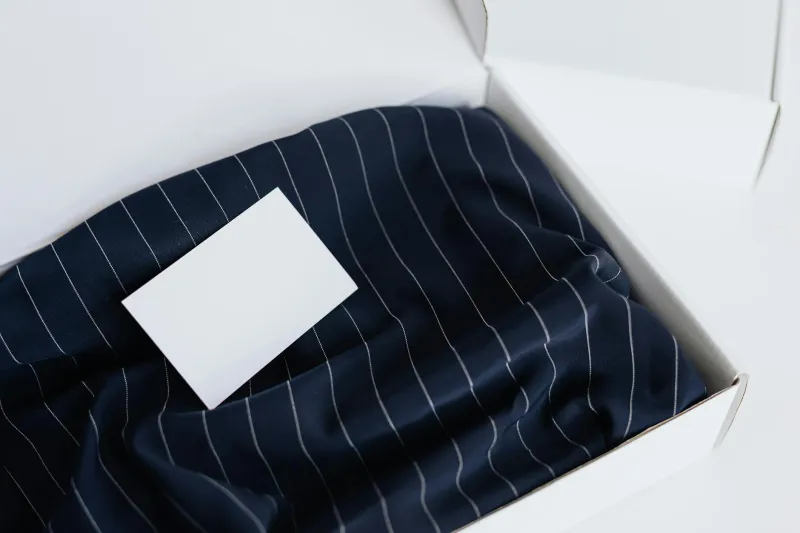
The packaging alone is a masterclass in manufactured significance. Each "Heritage" piece comes in a museum-quality archival box with acid-free tissue paper, a hand-written care card, and something called a "Generational Transfer Certificate" that looks suspiciously like a birth certificate for clothing. There's even a QR code that links to a digital "Heritage Portal" where family members can log the garment's "life events" and "emotional milestones."
Eternelle isn't alone in this space. Competing brand Ancestral Threads offers "Future Heirloom" pieces starting at $890 for a "Timeless Turtleneck" that comes with a 100-year guarantee and instructions for proper estate planning integration. Their marketing materials include testimonials from "multi-generational clients" and a calculator that supposedly demonstrates the "cost-per-wear across three generations."
The Inheritance Nobody Asked For
The most unhinged aspect of the heirloom basics trend is its fundamental assumption that future generations will want your carefully curated wardrobe. The brands are betting that your grandchildren will be thrilled to inherit a $1,600 t-shirt instead of, say, a college fund or a down payment on a house.
This optimism ignores some basic realities about how inheritance actually works. Fashion is notoriously cyclical, and what looks "timeless" today might look hopelessly dated in thirty years. More importantly, assuming your descendants will have the same taste, body type, and lifestyle as you is the kind of generational narcissism that therapists charge $200 an hour to unpack.
The "Legacy Care Guides" that accompany these pieces read like instructions for maintaining a museum exhibit. The Heritage T-Shirt manual includes 47 pages of care instructions, including seasonal rotation schedules, humidity requirements, and something called "energetic cleansing" that involves sage and moonwater. It also suggests annual "condition assessments" by certified textile conservators, because apparently your t-shirt needs more maintenance than your car.
The Psychology of Permanent Purchases
The appeal of heirloom basics taps into something deeper than just conspicuous consumption. In a world where everything feels disposable and nothing seems built to last, the promise of permanence is intoxicating. These brands are selling the fantasy of stability in an unstable world, where at least your t-shirt will outlive your anxieties about the future.
There's also the guilt factor. Fast fashion has trained consumers to feel bad about buying cheap, disposable clothing, so brands like Eternelle position themselves as the ethical alternative. Spending $1,600 on a t-shirt isn't wasteful—it's environmentally conscious! It's not excessive—it's investment thinking! It's not ridiculous—it's revolutionary!
This messaging particularly resonates with affluent millennials who are grappling with their own mortality and legacy anxiety. Having grown up in an era of rapid technological change and social upheaval, the idea of owning something truly permanent has obvious appeal. The fact that it's a t-shirt instead of, say, real estate or art, somehow makes it feel more attainable and less pretentious.
The Reality Check Nobody Ordered
Here's what the heirloom basics brands don't mention in their carefully crafted marketing materials: most family heirlooms end up in estate sales, donated to charity, or forgotten in attics. The idea that your great-grandchildren will carefully preserve and cherish your $1,600 t-shirt ignores the reality of how families actually handle inherited possessions.
Even more fundamentally, the "heirloom" label is doing a lot of heavy lifting here. Traditional heirlooms—jewelry, furniture, artwork—hold value because they're either appreciating assets or have genuine historical significance. A t-shirt, no matter how expensive or well-made, is still just a t-shirt. It's not going to appreciate in value, and its "historical significance" is limited to whatever personal meaning you project onto it.
The storage requirements alone should give potential buyers pause. The Heritage Care Guide recommends climate-controlled storage, annual condition assessments, and professional cleaning every five years. At that point, you're not buying a t-shirt—you're adopting a very expensive pet that never does anything cute or affectionate.
The Future of Fictional Legacy
As the heirloom basics trend gains momentum, we can expect to see even more creative ways for luxury brands to justify astronomical price points. Rumored upcoming launches include "Generational Denim" with embedded RFID chips for tracking provenance, and "Century Sweaters" that come with their own trust fund for maintenance costs.
The logical endpoint of this trend is probably a $10,000 pair of socks that comes with a family crest and instructions for incorporating them into your will. Because in a world where everything is content and nothing is permanent, the ultimate luxury might just be convincing yourself that your shopping habits are actually acts of love for people who don't exist yet.
In the end, heirloom basics represent fashion's most ambitious attempt yet to solve the problem of justifying luxury purchases in an era of growing wealth inequality. By reframing consumption as legacy-building, these brands have found a way to make spending thousands on basic clothing feel not just acceptable, but virtuous.
Whether future generations will actually appreciate these "investments" remains to be seen. But one thing is certain: somewhere in 2054, someone is going to inherit a $1,600 t-shirt and wonder what their ancestors were thinking. The real heirloom might just be the story of how we convinced ourselves that a t-shirt could be a time capsule.