Airlines Are Enforcing Dress Codes in First Class and the Gate Agent Is Now a Fashion Critic With Power Over Your Vacation
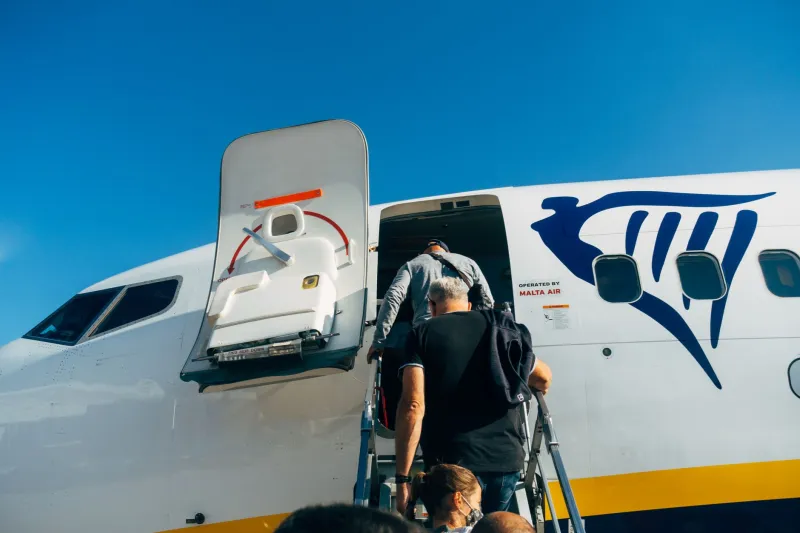
The airport has always been a lawless aesthetic frontier — a democratic hellscape where a man in a full three-piece suit stands behind a woman in a Snuggie and nobody blinks because everyone is operating on four hours of sleep and the collective understanding that normal rules do not apply at 5:47 AM near a Cinnabon.
That social contract, it turns out, is under review.
At least three carriers — two boutique transatlantic operators and one legacy airline that our legal team has asked us to describe only as 'a major domestic carrier that rhymes with 'Schmelta'' — are quietly piloting what industry insiders are calling 'cabin aesthetic alignment programs.' The rest of us are calling them dress codes. And the passengers are calling them something considerably less printable.
What 'Cabin Aesthetic Alignment' Actually Means in Practice
The programs vary by carrier, but the general structure is consistent: premium cabin passengers — first class and, in some cases, business class — are subject to a loosely defined appearance standard that prioritizes what one airline's internal documentation describes as 'visual harmony with the premium travel experience.'
This is not, technically, a dress code. There is no list of prohibited items. No one will be turned away for wearing jeans. What there IS, at select gates, is a 'Style Ambassador' — a gate agent with additional training in 'brand aesthetic alignment' — whose job includes a visual assessment of boarding passengers and the authority to have a quiet word with anyone deemed to be creating 'tonal inconsistency' in the cabin.
'Tonal inconsistency' is, as best we can determine, airline-speak for 'you look like you're going camping and you paid $4,200 for this seat.'
One Style Ambassador, speaking anonymously because she would like to continue being employed, described her role as 'less enforcement, more gentle suggestion.' She has, she says, asked a passenger in a novelty foam cowboy hat to consider checking it. She has complimented a woman in a silk blazer loudly enough that the man behind her in a fishing vest could hear. She has, on one occasion, offered a $15 amenity kit upgrade to a passenger who agreed to change into the complimentary pajamas before boarding.
'It's all very soft,' she said. 'Nobody gets denied boarding. We're just... curating the environment.'
The Influencer Incident That Started This Conversation
The program might have remained a quiet industry experiment indefinitely if not for a TikTok posted in March by travel influencer @LuxeLayoverLorraine, who has 2.1 million followers and a personal brand built entirely on the premise that she is always the most aesthetically correct person in any given airport.
Lorraine was flagged by a Style Ambassador at a gate in Miami for what the ambassador described as 'tonal inconsistency' — specifically, a head-to-toe neon yellow matching set that the airline's internal guidelines apparently classify as 'high-chroma disruption in a neutral-palette cabin environment.' Lorraine was not denied boarding. She was not asked to change. She was, by her own account, given a 'look' and a 'pause' and a suggestion that the airline's cashmere blanket was 'available in a shade that might complement the journey.'
Lorraine filmed seventeen minutes of content about this. The phrase 'they tried to neutralize my frequency' appears four times.
The video has 8.4 million views. The airline's customer service line has been busy ever since.
Economy Passengers Are Also Mad, For Completely Different Reasons
Here is the twist that makes this story quintessentially, beautifully American: while first class passengers are furious about being aesthetically managed, economy passengers are furious about not being aesthetically protected.
Since news of the premium cabin dress code experiments broke, a genuinely remarkable number of economy travelers have filed complaints arguing that THEY are the ones who deserve appearance standards — specifically, that they should not have to visually endure the sartorial choices of other economy passengers during a six-hour flight.
Actual complaints submitted to airline customer service portals, which were shared with us by a source inside one carrier's communications department, include:
- A formal request that the airline prohibit 'novelty graphic tees with aggressive slogans' in rows 20 through 35
- A complaint that a fellow passenger's Crocs 'created a hostile visual environment' during a Dallas-to-Denver leg
- A three-paragraph letter arguing that a neighboring passenger's visible socks — white, ankle-length, worn with sandals — constituted a 'foreseeable harm' that the airline had a duty to prevent
- One passenger who simply wrote 'THE SWEATPANTS' in the subject line and left the body of the email blank
The airline in question is not, to our knowledge, planning to implement economy dress codes. A spokesperson described the complaint volume as 'noted.' The word 'noted' was doing considerable heavy lifting in that statement.
The $14 Chardonnay Problem
Underlying all of this — the Style Ambassadors, the tonal inconsistency citations, the economy complaints about Crocs — is a particularly American belief that purchasing access to a space entitles you not only to be in that space, but to have opinions about everyone else in it.
The $14 airport Chardonnay is the purest expression of this belief. The moment you hand over that $14, something shifts in the American psyche. You are no longer a person waiting for a flight. You are a stakeholder in the ambient experience of the terminal. You have opinions about the gate seating. You have opinions about the PA system volume. You have opinions about the man across from you who is eating a breakfast burrito with audible enthusiasm at 6 AM, and those opinions are, in your view, legitimate grievances.
The first class dress code taps directly into this vein. Premium cabin passengers have paid, in some cases, tens of thousands of dollars for their seats. The idea that someone in a fishing vest or a neon tracksuit might be seated nearby — disrupting the visual coherence of the environment they have purchased — feels, to them, like a breach of contract.
It is not a breach of contract. It is an airplane. But the feeling is very real, and it is apparently worth $4,200 to not have to examine it too closely.
Where This Is Going, and Why It Will Be Terrible
Industry analysts who spoke to us on background — meaning they would talk to us but didn't want their employers to know they talked to us — suggest that formalized premium cabin dress codes are probably two to three years away from becoming an open industry conversation, depending on how the current pilots perform and whether any of the inevitable lawsuits go somewhere interesting.
The more immediate future involves more Style Ambassadors, more 'gentle suggestions,' and more TikTok content from people who feel their frequency has been neutralized.
Lorraine, for her part, has already announced a 'First Class Fashion Rights' campaign and a corresponding merch drop. The hoodies are neon yellow. They are, she says, 'intentionally tonal-disruptive.'
They are $89. They sold out in four hours.
The airline, we are told, has no comment.